Showing posts with label Japan. Show all posts

Wednesday, September 12, 2012

Contemporary Sino-Japanese Relations, A History of Great Endurance

The Communist government of China exhausted the last ounce of its courage after a high profile show of words over disputed Diaoyu Islands, and backed down quietly with its tail between legs. This is not the first time when a Chinese government was ashamed by Japan. History has seen the same humiliation imposed by Japan on the Qing Empirical Court, Peiyang Government, KMT Government and the Communist Government of China again and again.

  • 1894, Jiawu in Chinese calendar, China lost a war over control of Korea; thus came the treaty of Shimonoseki, when China lost Taiwan and its surrounding islands, including today's disputed Diaoyu Islands.

  • 1900, Japan joined seven western powers to invade China, and seized Beijing.

  • 1904, Japan launch a war with Russia over interest in China. Two countries fought on Chinese land, while the Chinese government declared neutral. With a win over Russia, Japan claims exclusive rights in China's Northeast region.

  • 1915, with a threat of full scale war, Japan forced China to sign a treaty known as 21 articles, in which Japan received exclusive status in China.

  • 1919, Japan claimed China's Shangdong Province in the post-war Treaty of Versailles, although China was also a member of the Allies.

  • 1928, trying to intervene China's civil war, Japanese army and air force attacked Jinan of Shangdong Province. Sixty-one hundred residents were killed, along hundreds of Chinese troops. Japanese army rounded up China's diplomats delegation. Chinese diplomat Cai Gongshi was tortured to death. Japanese cut his ears, and tongue and eyes. Cai and his 17 staff were then beaten and killed.

  • 1931, Japanese army attacked Chinese military in Shenyang on September 18. Chinese government ordered its troops 'do not resist'. Soon the entire northeast three provinces fell to Japan.

  • 1937, Japanese army attacked Chinese military in Wanping near Beijing on July 7. The incident marked the beginning of full-scale Sino-Japanese war, also known as Eight Years of Resistance'. China lost 30 million people, including 400 thousand residents of Nanjing, then capital city, slaughter by Japanese army in days following the fell of the city.

  • 1972, Communist government of China and Japan established formal relationship with a joint announcement in Beijing. In a speech in Beijing, Japanese Prime Minister Kakuei Tanaka expressed regret for having caused 'inconvenience' to China in previous invasions, and personally felt 'puzzled' for the history.

  • 1998, then Chinese President Jiang Zemin visited Japan. While Japan had apologized to South Korea and some other southeastern Asia countries for its war crimes, Japan never apologized to China. As the first head of state from China to visit Japan, Jiang sought an official apology from Japan over its invasion and war crimes. However, Jiang was humiliated and ashamed by Japanese government and press.

Perhaps, rather than repeatedly begging Japanese government to 'reflect' on history and the suffering Japan had caused to China, Chinese government needs to reflect on what had allowed the history of China's great endurance to continue in the past 100 years.

On the eve of September 18, 1937, Chinese government learned of Japanese military's plan to attack Shenyang. At the time, Shenyang was the top city in the northeastern China, known as East-Three-Provinces. Shenyang was also the base for China's northeastern army, the best equipped military force in China. Soldiers were ordered to lock weapons and open the barrack gates. They should quote, 'lay on the bed for the country', end of quote. Thousands were killed on bed by Japanese bayonets. To show a good gesture, the city opened its gate at three o'clock in the morning before Japanese army arrived.

The height of the war resisting Japan's invasion took place in Shanghai on August 13, 1937. China mobilized 50 divisions, about 60% of its entire military power. Three months later, 187,200 soldiers were lost, sometimes at a rate of one division per hour. Still, the government directed its finance department to keep paying settlement of 1901 to Japan on time every month. As a matter of fact, Chinese government did not declare war to Japan until the break out of Pacific War when US declared war against Japan.

Chinese governments often cite inferior military power as the excuse to bowing to Japanese aggression. That's is an excuse over-abused.

Tuesday, August 28, 2012

Diaoyu Islands

Diaoyu Islands are a cluster of tiny islands in eastern Pacific close to Taiwan, between China and Japan. Historically, Diaoyu Islands were part of China, but taken by Japan in the late nineteen century. The island was to be returned to China per truce treaty of the WWII. However, while the then Chinese government was entangled in civil war, the US occupancy kept it as a navy target field. The island was somehow, with no specific reason, turned over to Japan in the 1960s. At the time, the mainland was in the middle of the unprecedented Great Cultural Revolution, and the Taiwan was unsettled after relocating from the mainland. Neither side paid much attention until a few years later.

Although disappointed, Taiwan did not have courage and motivation to challenge arrangement made between the US and Japan. Taiwan itself had been occupied by Japan for decades. Many Taiwan people still have complicated feeling towards that period of history, when Taiwan is ruled as part of Japan, rather than as a colony. The first elected President Li Denghui had his brother fought the WWII in Japanese Imperial Army. On the other hand, Taiwan relies on US's protection against China's military threats. Still, Taiwan made some gestures to show its claim over the island. When fishermen from mainland were harassed by Japanese Coast Guard, Taiwan vowed to face off Japan with its navy, and it did.

The Communist government on the mainland is less enthusiastic for a number of reasons. By definition, the communism movement does not recognize the boundary of countries, even boundary of families (to be elaborated at another time). Throughout the history of the Chinese Communist Party, there had been abundant cases when they 'proudly' placed the interests of the Party above the interests of the country. For example, when then Chinese government was at war with the USSR, in China, over the control of a railroad, the CCP asked its members to attack Chinese government to aide USSR. In another example, to appease leaders of North Korea, China gave a large piece of land to them, so their dear leader can claim home to a scenic mountain.

Handing of the Diaoyu Island was no exception to the CCP's tradition. Afraid the US might return the island to China (Taiwan), the CCP's official mouthpiece People's Daily issued an editorial urging the US to give the island to Japan. In the article, scholars loyal to the party made every argument to prove that the island belongs to Japan, not China.

Although Chinese governments on both sides of the Strait could care less, grassroots efforts never stopped. As a matter of fact, the current Taiwan President Mr. Ma Yingjiu was a devoted activist in Diayu Island claim when he was young. A few days ago, a group of advocates sailed from Hong Kong in a rental fishing boat. The group broke through embargoes by Japanese Coast Guards, and landed on the island before being arrested by Japanese police.

Large scale of anti-Japan protest broke in China. In some places it turned violence, while stores selling Japanese goods were vandalized, and Japanese brand cars were destroyed. A white BMW with Beijing license and an black Audi with Anhui license forced the ambassador of Japan's convey to stop in Beijing, and took away the Japanese flag on his car.

Once again, the communist government on mainland told Chinese people, it's better to leave the Diaoyu Island in Japan's hand. Official mouthpiece Global Times issued an editorial authored by Han Xiaoqing, the chief representative of People's Daily in Japan, declared the 'Protecting Diaoyu Island' movement was anti-government, thus anti-China.

The backdrop of current soften stand of the CCP was the timing. The CCP is expected to hold its 18th National Party Convention this fall, postponed from summer because of fallout of senior official Wang Lijun's defection to the US. The once-in-a-decade power transfer means everything to Party officials, and nobody wants a distraction from any direction.

Thursday, September 29, 2011

Korean Celebrated Japan's Monster Earthquake

Koreans displayed a banner at the Quade-Final game of the Asian Football Confederation Champions League, when they hosted the Japanese team of Cerezo Osaka. The banner said "Congratulations on Japan's Monster Earthquake!". The banner was written in Japanese.

With that said, the Korean team Jeonbuk Hyndai Moters FC won the game 6:1. The game took place earlier today at the Jeonju World Cup Stadium in Jeonju, South Korea.

Tuesday, May 24, 2011

Wen Jiabao Cried Speaking to Chinese Diplomats in Japan

Permier Wen Jiabao was seen wiping tears while speaking to diplomats at Chinese embassy in Japan. Wen revealed that it was his personal decision to visit the earthquake-tsunami-nuclear hit Fukushima area. Wen explained the rational of his visit, and signed he might not be able to come to Japan again.

Some read the speech a sign of Wen being increasingly isolated at the top level of power in China. One thing for sure, once Wen retired from his post, he would not be able to go outside China. There has been no precedence of former top leaders being allowed to go overseas after they departed offices.

Monday, September 13, 2010

Why the Hell Are You so Soft?

Chinese, Japanese and Koreans and Russians around the world are amazed at the CCP's soft stance against Japan's aggression in Diaoyu Island.

Diaoyu Island is historically an offshore island under Taiwan's jurisdiction. It was took over by Japan, and at the end of WWII was transferred to the US military, and had been used as a targeting proof ground. Although the US had promised to return it to China, which means ROC or Taiwan at the time, they instead transferred jurisdiction of the island to Japan in 1972, without transferring ownership. In the past 40 years or so, both Taiwan and Japan claimed ownership, and it had been handled as a disputed territory by both. Although pro trolling the area with fishery agencies, Japan had refrained itself from actual landing on the island of 6.7 square miles, and prohibited any Japanese private citizen to access the island. The government of Taiwan also avoided confrontation with Japanese officials, but claimed full territorial claim on the island. The current ROC/Taiwan President, Mr. Ma Ying-jeou was an activist of campaign of Keeping Diaoyutai Island. In 2008, when a Taiwan fishery boat was sunk after a coalition with Japanese official ships, he ordered Taiwan official ships to a standoff with Japanese official ships.

The Communism China, on the other hand, had been absent from the scene for a large part of the dispute until recently. Prior to the handover in 1972, the CCP government was afraid US would return the island to Taiwan, its political rival. Therefore, the CCP argued extensively that the island should belong to Japan, a rare sympathizer of the regime at the time. Entering 21 century, with increasing naval and air military strength and growing economics appetite, Beijing quietly joined the choir of claiming sovereignty over the island. Indeed, without the island, China will loose hundreds of thousands square miles of water territory. Equally important, Chinese navy, submarines in particular will loose the only path to the Pacific. Not willing to make a scene, China also restraint itself from alerting the Japanese by actual accessing the island. The Chinese government counts on the dispute could be dragged on to the next millennium and resolved by itself by then with China's ever growing military might.

While all government imposed self constraint, the water around the island had been relative clam in the past, until the climax of last week, when Japanese officials arrested a Chinese fishing boat captain on criminal charges. And this is seen a no-return point. The captain was sentenced to a 10 days jail time, but the significance is that or the first time in history, Japanese government applied civil code and claimed sovereignty in addition to jurisdiction rights.

As expected by the Japan government, CCP backed off.

What many Chinese people around the globe do not understand is that CCP has always placed the interest of the Party on top of everything else, including the sovereignty of the country and welfare being of the people. When the Chinese government (ROC by then) took over the Middle-East Railroad from USSR in 1929, CCP announced its military and political forces would 'defend USSR by force', even though it was USSR who occupied Chinese territory in Northeast. While the Communist Party leader of North Korea begged for a couple of mountains on the Chinese-Korea border for propaganda purpose, the CCP redrew the border to Korea's satisfaction in a matter of days. When KMT troops hided out in a disputed area along China and Burma, CCP disavowed the area so that Burma military could attack the Chinese troops.

For CCP, the Party's interest is the No. 1 priority and the only essential interest. Everything else could be sacrificed for the sake of the survival of the Party. Knowing this helps to understand why the CCP is avoiding any serious conflict internationally at all cost.

In other country, a mishandling of a potentially explosive evident may leads to the crash of a government. In China, it could threaten the ruling of the Party. That's why the CCP has been soft on not only Japan, but also Korea, and Vietnam, Philippine, etc., etc.

For the interest of the Chinese, and of the country, CCP must go, one way or another.

Wednesday, August 11, 2010

Koreans Dug out Records on Merging with Japan


With records from Japanese archive, Korean scholars believed the annexation treaty of 1910 was illegal due to technicality, probably a trick planted by then Korean King himself.

The discrepancies is obvious when placing the Japanese and Korean versions of the treaty side by side. The Japanese version was signed by the then Japanese emperor along the Japanese state stamp. However, the Korean version bears no signature of the Korean King, and the stamp was not right. The stamp was usually used in daily operational matters, rather than the state stamp used for important issue.

Korean scholars argued the discovery an important evident that the annexation was not approved by the Korean King, as had been claimed by Japan. Korean scholars hope to nullify the treaty.

Historically Korean had been a tributary state of China for two thousand years until late nineteenth century when China lost a war with Japan in 1895. Korean gained the independent state status in name when under Japanese control, until the treaty of 1910 formally annexed it into Japan.

Thursday, November 19, 2009

"The Terminal" as in Reality Show at Narita International Airport of Tokyo Japan

As in the 2004 movie, Feng Zhenghu was stuck in the terminal. Even worse, there's no McDonard to pick break crumbles. To be precise, Mr. Feng was stuck at the gate of the immigration pathway, only that Mr. Feng has a reversed problem: he did not want to enter Japan, despite a deal made by the Chinese and Japanese government.

Mr. Feng is not anti-government. He is a scholar who uses his writing to shed light on the life of poor people in China. Despite a strong economy as a whole, the per capital personal income of an average Chinese people falls blow all of its Asian neighbors such as Vietnam and Thai, and blow majority of the African countries. Mr. Feng annoyed the communist government simply because he reached his hands to poor people in the city he lives, Shanghai. To play down the possible political tone of his suffering, he cautiously not ask for coming back to China, but asking going back to Shanghai.

A Chinese citizen, Mr. Feng went to Japan for a short visit, but was denied entrance at Shanghai International Airport. Air Japan kidnapped Mr. Feng, by force at witness of hundreds of passengers on Nov 4, 2009, back to Japan under pressure from their business partnership in China.

Mr. Feng refused to enter Japan. He has since made eight attempted to return to China, but was denied and 'deported' each and every time.

An active human rights advocate, Mr. Feng had been persecuted by the communist government ever since the Tian'anmen Square Massacre in 1989. Even a three years jail time couldn't shut him silence. Mr. Feng had been a voice for poor people's welfare. The communist government adopted an innovative approach, to get a foreign company (Air Japan) to kidnap a Chinese citizen from Shanghai to Japan. The government had hoped Feng would stay in Japan in fear.

Mr. Feng believed he had committed no crime. He refused to enter Japan, and had been staying in the busy international arrival terminal at the Tokyo Narita International Airport for two weeks. The only way to move in the terminal is forward, to the immigration passage. The Japanese government at the request of the Chinese government has banned residents in Japan to provide food to Mr. Feng, counting Mr. Feng will move forward into Japan.

Each day, thousands of international travelers pass Mr. Feng's sitting place to enter Japan. If you are going to Japan, please bring Mr. Feng some food, toothpaste, etc. Thank you.

Mr. Feng's twitter account. Vidly video showing surroundings of the terminal. A detailed account of the ordeal.

Mr. Feng is a Chinese citizen. If Mr. Feng had committed any crime, the Chinese government should take him in and charge him accordingly. If Mr. Feng did not break any law, as a Chinese citizen, he is entitled to return to his home country. The incident had drawn attention from Japanese media as well as other media around the world.

When contacted by media, Japanese immigration official confirmed Mr. Feng was carried to Narita by Air Japan, but did not comment on the accusation of forceable kidnapping committed by Air Japan employees.

Dear Party, stop embarrassing yourself.

Air Japan, in a statement, criticized Mr. Feng for making a scene when he was kidnapped by force by Air Japan's employees to the flight back Japan. Air Japan was subsequently humiliated by the attending media in the press conference, and retracted the statement.

Japanese government played an unethical collaborator role in the incident. We can't ask much from Japanese government. However, stop making yourself a fool, like the communist Chinese government already did, in front of the world (in the least, in front of thousands of confusing international traveler passing Mr. Feng's spot).

How can you help?

  • You can contact the Japanese government, or your nearby Japanese consulate and asked for Mr. Feng's case. Ask them why a civilized government will collaborate with the communist rugime. Ask them how come Air Japan get away from kidnapping a citizen by force from another country and carry him back even without a ticket? Although the Japanese government played a lesser role than the communist China, they probably are under higher level of scrutiny from their own citizens and the international society. They are also a capable party in the ordeal since Mr. Feng is now staying on Japanese soil.
  • You can contact Chinese government or your nearby Chinese consulate. In additional, you should raise the case whenever there's an event of public relationship significance. For example, a TV show featuring a Chinese expert or a radio interview of a Chinese diplomat. Tell them feel free to shot Mr. Feng after he returns to China if they find him of violating any Chinese/Communist law. However, show the international community that China does have a legal system by following it.
  • You can join twitter and follow Mr. Feng's feeds. Somewhere the communist government must be following the case, and make them fear when counting the number of people who are following the story.
  • You can bring some food, cloth, books and batteries to Mr. Feng is you enter Japan through Tokyo International Airport. You can ask a friend to do it for you if you have a friend going there. Mr. Feng is stuck there in the international arrival terminal right before the immigration checkpoint, and it's hard to miss him.
  • You can vote with your money by boycotting Air Japan. There are plenty alternatives to use on any international routes operated by Air Japan.
  • Post the story on every venues you have access: Facebook, Youtube, to name a few. Ask your Chinese friends what do they think. Because of the effective media block and brainwash in the Chinese media world, an excellent job done by the propaganda branch of the communist government, less Chinese are aware of the incident than western readers.
  • You can show off your art talent by making a song, video about the real world 'The Terminal' ordeal and upload it to popular video sharing site, such as YouTube. If you happened to live next door to Tom Hanks, you may asked them to re-do his popular movie, only this time based it on a true story. Although there is not much you can if you do not live in China or Japan, you can certainly make every communist diplomat's public life miserable. They will report through their chain of command, especially when it's not their personal fault.

Thursday, August 07, 2008

Recycled Gyoza Double Kill

Gyoza dumplings produced by a Hebei food factory were recalled after Japanese died of pesticide poisoning. An intensively contended joint investigation did not find a conclusive theory as to where and how the dumplings were poisoned. Japanese police determined the poisoning took place in China before being imported to Japan, while the Chinese police proclaimed the poisoning could only happen after it reached Japanese shore.

During the investigation, dumplings were recalled from the shelf of stores. Chinese government allowed these batch of dumplings re-entering the retail market, in China of course. Many more Chinese were to be poisoned to death in the months followed by this greedy and blind decision.

The Chinese Foreign Ministry formally admitted the guilt to the Japanese government in a statement made August 7, 2008, one day before the opening ceremony of the 2008 Summer Olympic Games to be held in Beijing.

Thursday, June 19, 2008

A War Lost

Chinese on both sides of the Taiwan Straits lost in battles against Japanese's aggression.

Taiwan canceled a planned protesting trip of its navy fleet in the disputed Diaoyutai area. Both Beijing and Taipei recognize Taipei is directly in charge of the islands. The president Ma Ying-Jeou explained that what he meant the other day that he would launch a war against Japan's aggressions was a war in the international court, rather than on the open sea.


Beijing signed a treaty with Japan, and basically agreed with all Japanese claims on Chinese territory. Any opposing opinions were prohibited from appearing on any media or the Internet. There's no apparent reason to explain why did the communism government made the deal, other than to make Japanese leaders a happy guest in the summer Olympic to be held in a couple of months in Beijing.

That Dame Olympic Game!

Monday, June 16, 2008

Another Year on Occupied Islands


3:50 in the morning of June 16, 2008, Taiwan Coast Guard escorted a civilian boat to the Diaoyutai. Taiwan Coast Guard was authorized to open fire if proved by the Japanese warship in the disputed Diaoyutai area.

Taipei government ordered the Coast Guard to upgrade its fleet to match their Japanese counterparts to better Protect Taiwan fishermen's interest in the area. Beijing government is facing mounting criticism from its people, especially the increasingly vocal online community on its soft stance on Sino-Japanese issue. Many argued the two party must hold hands in defending the country, just as they did during World War II.

Monday, March 03, 2008

A Stale Invitation

Chinese president Mr. Hu Jintao is to officially visit Japan, the first of such level in a decade due to the obstacle of the Japanese premier admiring WWII war criminals in official capacity. The visit is seen by many on both sides to be the start of a new era in Sino-Japanese relationship, a relationship of two neighboring countries separated by "a waist-belt of water", as ancient wisdom says.

However, the date picked up by the Japanese government is troublesome. April 17th is the anniversary of the Treaty of Shimonoseki. The Treaty of Shimonoseki was signed by then Chinese and Japanese government on April 17, 1895, after China lost the war assisting Korea to defend Japanese invasion. The treaty states:
* China withdraw military from Korea; Korea no longer a part of China;
* China surrender Taiwan, Penghu, and Shandong to Japan;
* China pay Japan 200 million liangsilver on military expenses;
* China can not detain any people work for Japanese military;
On the schedule, Hu will visit Tokyo on April 17 and 18, meet with Japanese prime minister and emperor.

Japanese is known for their diligence and intelligence, but sometimes they play it too hard.

Sunday, February 10, 2008

Whale Slaughtering Photos Shocked Australians


Australians were shocked when they saw the photo of a whale and its calf were dragged in a Japanese whaling ship. The picture was taken by an Australian customs ship Oceanic Viking on an official mission of monitoring and evidence collecting targeting Japanese while hunting activities in the Australian declared While Sanctuary. The Australian government, with a moral burden carried over by pre-election promise to protect the whale sanctuary, plans to bring legal action against the Japanese whaling practices.

Despite the fact that many whales, such as fin whales were on the list of endangered animals to be preserved and that Japan was a signature country of the international treaty, Japan continue to send whale hunting fleet escorted by armed coast guard warships.

The ICR of Japan issued a statement on its website disputed Australian media's description of the two whales in the picture as mother and its calf. The ICR claimed that the two whales were 'random samples' of varied size whales in a research program in order to get accurate statistic data (as the banner over the whaling ship read). However, spokesman of Peter Garrett, the Australian environment minister claimed to have received independent scientific advise saying they were in fact related.

On the other hand, the Japanese government threatened that if they had too much hassle in continuing the scientific research, they could withdraw with the treaty and start commercial whaling overnight. The majority of Japanese support whaling. "What about lambs?" angry Japanese asked western journalists.

Saturday, March 03, 2007

Anit-Japan Protest in Korea

This summary is not available. Please click here to view the post.

Monday, October 30, 2006

Why We Fight: The Battle of China

Why we fight: the battle of China can be viewed on Google Video, also available at Amazon. It's a film which explains what, why and how of the Chinese resistant against Japanese invasion, as well as the US's assistants to the war, which became an essential part of the second World War.

Monday, September 18, 2006

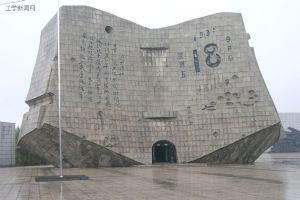
Remember September 18th, 1931


Japanese army attacked the Northern Garrison (Beidaying) in Shenyang, the headquarter of then Northeastern Command of Chinese army on September 18th, 1931. The incident was remembered in Chinese history as 918 Incident. September 18th was recognized as the Day of Shame of China. Commander General Zhang Xueliang ordered the troops 'do not resist'. The order was to lock all weapons in the arsenal, and stay inside rooms. The Chinese soldiers were told that they would 'sacrifice for the nation's benefit'.

The 10 years from 1927 to 1937 was often referred as the 'Golden Decade' in Chinese history, while the economy was booming, and infrastructures were built. Leaders of China (Chiang Kai-shek, etc.) did not want the fast growing to be disturbed by anything, such as a war with Japan. One prevailing theory at the time was that once China became prosperous and strong, Japan would no longer dare to invade.

History proved them to be wrong. The invader would not wait for the day when China became strong enough to deter external challenges.

Remember September 18, 1931, and remember the 30 million Chinese killed by the Japanese invasion.

Friday, September 15, 2006

Admiring War Criminals is Morally Bankrupt

'Paying one's respect to war criminals is morally bankrupt and unworthy of a great nation such as Japan, said Congressman Tom Lantos, the ranking Democrat on the Congressional International Relations committee. Republican Congressman Henry Hyde, the chair of the committee joined to criticize Japanese leaders for the shrine visit, as well as history textbook revisions to downplay atrocities committed by Japan during WWII.

Japan's prime minister Junichiro Koizumi led annual official visits to the Yasujuni Shrine, where convicted WWII war criminals were honored.

Bloomberg

Friday, September 08, 2006

Armitage Ratted out the CIA Spy


Richard Lee Armitage, one of a few core neocons who served the Bush administration admitted that he leaked out the identity of undercover CIA agent Valerie Plame to columnist Robert Novak. The Bush administration launched a smear campaign against Ms. Wilson's husband Joseph Wilson, whose report on the connection between Iraq and nuclear material yellow cases did not support Bush's Iraqi War rationale. Mr. Wilson was assigned by the CIA to investigate the issue and he did not find Iraq in the process of building WMD before the war was launched. His report was presented to the Bush administration but was chosen to be ignored.

Armitage was the deputy secretary of state when the leakage happened. He is also a close friend to Mr. Chen Shuibian of Republic of China. He is also an advocate of re-arming Japanese military forces, despite strong protest from Asian countries who had suffered in the Japan's invasion in the WWII.

Tuesday, May 02, 2006

Statue of General Zhang Zizhong in Tianjin


General Zhang Zizhong (1891-1940) was the highest ranking Chinese officer died in the battlefield during the war defending homeland from Japan invasion.

General Zhang was born in Linqing, Shangdong. He entered Tianjin Law and Government School in 1911. He was the mayor of Tianjin from 1936 to 1937. General Zhang visited Japan during April 28 to May 23 in 1937. Although he was sent by his commending officer Song Zheyuan, many Chinese saw the visit a poor judgement. At the time, it seemed General Zhang attempted to avoid a full scale war between China and Japan. In one instance, he ordered Chinese troops not to return fire even after Japanese army had started attacked Peking. He also stayed behind as a civilian political leader after Chinese troops retreated. These controversial moves made him a public enemy at the time.

Seeing diplomatic maneuver no longer a feasible option, he left Tianjin soon after its fell to Japan, and reassumed military command. Although the central government cleared him of any wrong doings, he was not forgiven by many Chinese at the time, and probably not by himself. In a scene of a biography movie of General Zhang, when he arrived home after fled from Japanese occupied Tianjin, he was shut out by his wife, and spit upon by his children. It is believed that General had the death wish of dying for the country on the battlefield, before the war would be lost.

Between 1937 and 1940, his troops participated in the battle of Taierzhuang as well as other battles. Each time, he would encourage his soldiers to die in a good place for a good cause. His troops was among the most effective Chinese military forces and won many major battles, often with high cost.

In May 1940, as the commanding officer of the 33rd Army Group, he led 2000 soldiers to intercept a much stronger Japanese attacking force. Some historian think General Zhang was by and large pessimistic on the outcome of the war, and this move was particular suicidal. Before he set out, he took his formal attire and wrote a letter to his associate commander, in which he said he was going to die for the country. General Zhang was out numbered and out gunned. He fought as a soldier after wounded several times to his death on May 16, 1940 in Nanguadian, Hubei. His command and his soldiers all died with him.

Many Chinese cities named roads after his name. In Tianjin, Zhang Zizhong Road and Zhao Dengyu (another general died defending homeland against Japanese invasion) Road accompanied each side of Haihe River winding through the city. In May 2, 2006, a bronze statue of General Zhang was erected on the intersection of Zhang Zizhong Road and Taian Road. The statue is made by professor Jing yumin of Tianjin Art Institute.